Mind Travel

Like most of my adventures, this one starts off sketchy. It follows a blank stare from the car rental agent, deflecting my empty pleas when I cannot produce my South African driver’s license. ‘I left it in the flat, can I show you a copy on my phone instead?’, I don’t realise how ridiculous I sound in the moment because desperation is the mother of idiots. Sigh. I give myself a little scolding but quickly retract it considering I’m on holiday and I deserve a dumb mistake… or two, lol. I take to a ‘ce la vie’ sway back to the flat and wait for the cold water to hit my travel buddy, who is as annoyed with me as I thought they would be. Iriz-wari-iriz. Soon we are in a luxury VW sedan, on the high-way, south coast bound.

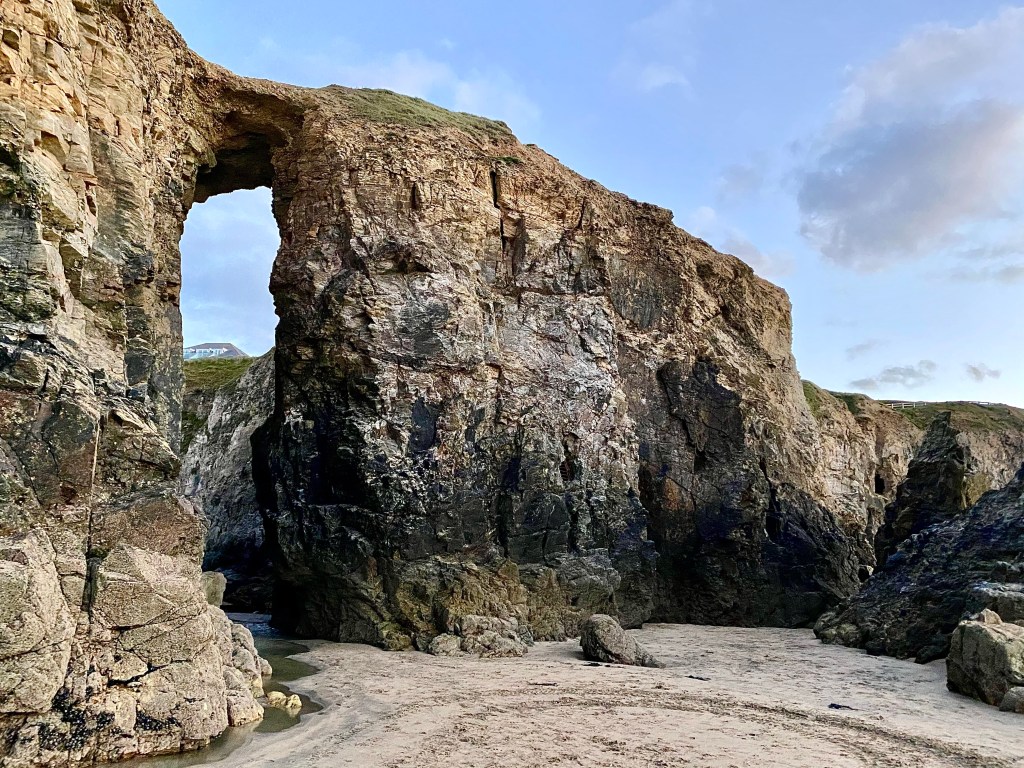
I remember edgy cliffs, the kind you fall off into the sea without realising. I remember a hypnotic blue ocean, the kind you drown in wilfully. I remember Durdle Door, a bizarre rock formation into the ocean, bearing testament to all that was before time. I remember a visceral awareness of my humanity, and how nature is our umbilical cord to the Divine. I sit in the gritty paradox of being insignificant and majestic all at once. It is in the vastness of nature that we realise how small we are yet each worthy of a unique fingerprint.

The human condition is an existence in tension, a thing that is but isn’t.

I remember stuffing my cardigan pockets with tiny brown beach pebbles, trudging them up the hill and into the car all the richer. I am my best thing, deserving of my own empathy.

I remember looking off into the pleated hills nestling the Lost Gardens of Heligan, and in them realising the monotonous beauty of breathing at the will of God. I wake up to my place in the radiance of things. In the light bathing the green, the need to survive quiets. I am beautiful, I can be delicate and soft without it feeling like a form of death. Vulnerability is not a betrayal of my independence; but the Eden in us all.

I write this back in London, the trip in rear-view. I have learned to monumentalise my Joy, and my conscious experiences of a good Father reaching for me, more than I could ever reach back. I memorialise myself in blue fluidity and lush green thrive.

The beach pebbles now sit in a reused jam jar, next to my Monstera, growing towards a lazy winter sun. A thing that is but isn’t.
Cloud Dwellers

A former would-be lover, after realising the concavity of the kind of love and life I wanted to inhabit said something that has stayed with me. There is a split second between receiving, processing and reacting to information. In that time, I realised he was right. I do live with my head in the clouds. I could not argue or deny the warm feeling of finally being understood, even by way of rejection. It brought into light what I had struggled to find vocabulary for. What I still struggle to understand, though, is why there are so few of us up here.

If you were in a grocery store and the manager said you had an hour to spend $5000, you would go mad. You would get what you really wanted but often deny yourself. You would try a bunch of new stuff and see how it goes. Sometimes the doorway to your passion and purpose is to try a bunch of stuff and see how it goes. This sort of abandon requires a sense of detachment from imposed parameters. And if you find yourself with more interests than socially prescribed? You live and embody them all. Embracing our complexities is what turns our juxtapositions into art.

To live in the clouds is to choose creating over conformity.

This thought may appear dangerous in third world and developing countries because we are often a salary or a bread winner’s death away from poverty and utter demise. We are socially primed to have one fire-proof plan – a ‘reliable’ university degree. But the reality is that most eighteen-year-olds cannot truly grasps what they are getting themselves into until they form a generation of middle-class South Africans stuck in jobs and lives they hate – feet painfully nailed to the ground by the demands of life.

In contrast, many of the working-class people I have met in the UK have had nine lives. They often have multiple degrees, career paths, and in multiple countries; not as means of survival but as means of education and self-actualisation. The concept of becoming is not at the expense of feeding your village. Nor is it an attempt at curating the perfect career aesthetic – a misplaced projection of #blackexcellence. Instead, life is a collage of experiences, messy, full, lived.

(To the sinical I propose we stick our hands up on the roller-coaster ride because if it is going to kill us then holding on to the bar will not help. If life is set with sudden turns, if we are bound to find ourselves upside down, then wearing rose tinted glasses is not the worst way to go.)

As means of keeping my place in the clouds, of dreaming while awake, I meet with a wondrous group of women and we practice what we have now dubbed writing yoga or yoga for writing. My facilitator, Amy, is a cosmic wonder. It mostly consists of playing with imaginative prompts to create narratives.  An exercise might involve visualising a toilet and then becoming a toilet. I know right– the trick is not over-think it. The trick is to find play and nuance in the seemingly mundane. Changing a lens or medium of observation can often change a subject’s definition. If you looked at your life through the lens of child, or through a person on their death bed, your perception of your circumstances might drastically change.

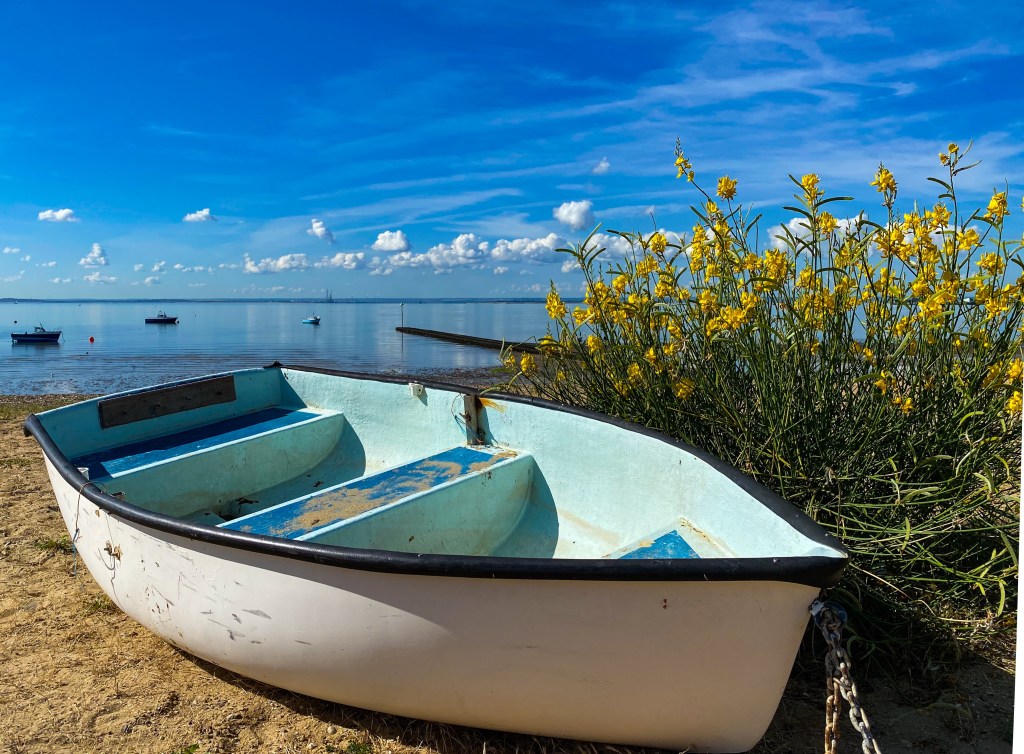
I am not suggesting that we be far removed from the realities of life, but that we can interrogate the restrictions that bind us. We can ask where am I and how did I arrive here? We can create space in our stratosphere for play, joy, expression. Finding your cloud can mean detaching from capitalist notions of ownership (ask me about boat houses later), or pursuing a long-desired dream, unsubscribing from societal norms that no longer serve your growth, or choosing to wait for the kind of love you want. Or, simply, pockets full of beach pebbles.   

Growing Roots

I am flailing, mid-air, mid-worlds. I have cut myself from the ground, from home. I am desperate for warm soil, familiarity, but the flailing takes to flying and I can’t explain how I am happy here. I am waiting for the African hair store to open when a breeze gathers around me – London feels like some where I’ve been before, it fits like a Cinderella shoe the morning after. But how does one anchor themselves to a place without a deep love – without years of fermented friendship and unwavering family. Can roots grow on furniture?  

My favourite memories are of my childhood years spent in Protea and Chiawelo – Soweto. They mostly feature a band of dusty kids pretending in a 10-brick ‘house’ or taking turns rolling down a hill in empty oil drums. We were an eclectic mix of languages and parental history; the pollen of bantu stands germinating on township concrete. As an adult, I am often dazed by how children create language where an impossible chasm should otherwise loom. How they meet on opposite sides of a river and jump into a downstream joy, buoyant in the ease of innocence. We were curious things cooking stolen tomatoes and maize meal in dirty tin cans axigangeni. Most of us didn’t belong, those who did had nowhere else to go. Every so often a kid, who’d been abandoned for a new city lover or weaned prematurely for the sake of a kitchen job, would finally come to live with his birth mother; jostled out of his grandmother’s fertile rural soil, crying, roots flailing. He would have not chosen this form of despair, this severing. Soon enough though, he too would join the bustling metropolis, swiftly trading in broken glass diamonds and cigarette foil gold.

The store is late to open today. Nostalgia swirls around me. In some parallel version of the universe, I am experiencing London through Soweto’s lens – a metropolis of misfits. Most of us don’t belong and those who do, have nowhere else to go.

I am a child in adult costume. I’ve come all the way across the world to find a memory. I have chosen freedom, the kind that cuts you right out the ground. Only, roots don’t grow on furniture or on the material possessions we think will make a foreign place feel like home. They grow in faith. In the faith that you are where you need to be, that all is as it should be.  

Where are you? How did you come to it?

“I See You”

(For Those Who Wish to Return.)

Adaptation is a process in self-preservation but can quickly take the form of assimilation to a degree of self-catabolism. We have all borne the pretence of assumed opulence when an African visits or lives abroad, returning with a 2-minute-noddles accent. The more Africans I meet here, the more I witness an active abortion of what seems inferior, a breaking of the tongue into new phonetics, teaching it to swallow words, swallow home. I worry about my own tongue, my essence, what it will learn, what it will lose. My anxiety over the loss of cultural architecture also surfaces in my thoughts for home.

The advancement of social media and global access has resulted in Africa’s landslide towards the West as the standard of affluence. In our attempt to adapt, we have also assimilated to American/Western culture, turning from guide to follower. Even so, Papama Mtwisha’s bold call continues to be timelier, “Africa Your Time is Now!”. It is a call to the world to take note but more urgently a call to African actualisation.

My heart broke when I realised that there is not a single mall in the UK devoted to African businesses and narratives. Instead, we are shelved as a niche experience, something to pick-up, then put down, never to aspire towards or hold up as mirror for reflection. The reality of the reverse is ludicrous if not criminal. African cities are bursting at the seams with mega-malls stuffed with European brands, while we marginalise our own businesses and support them as if it were a favour. Is it not time we see ourselves?

We are a cultural colliery. The depth and vibrance with which we show up in the world is the essence of our magic. We radiate in contrast to European blandness. Nothing can be compared to the undercurrent of seduction in a Xibelani dance, the ever-evolving township music and fashion subcultures, or the comparable strides taken in the medical industry in this pandemic alone despite overwhelming challenges. We are the promised land, the drumbeat, the heat of potential. In my time here, I have arrived at this: The West is not better, it stole a head start, and hired a great publicist.

It is impossible to dream away the yoke of corruption that cripples any believer as some version of Animal Farm plays out in most African countries. In South Africa, the deconstruction of traditional community started with colonial industrialisation but has been propagated by centralisation. We often wonder what it is to be African in the modern age on the continent and diaspora. Beyond the cool Afrofuturistic outfits, modern and future Africa can bear the resemblance of its younger self: community, vumhunu. If we unthread ‘Avuxeni’ into ‘It is a new day’, or ‘Sawubona’ into ‘I see you’, we find in the tapestry of simple greetings the acknowledgement of time, of the other and therefore of oneself. We cannot return to our villages, but we can recreate the ecosystems that sustained their thrive. A practical translation of ‘Community’ is the “Buy Black” movement, villagically, townshipically, nationally, continentally, globally. Not because we should hate anything other, or as a form of reverse racism but because we are each other, we are all be we have; we are the ecosystem. And because change is that simple.

‘Amandela’