
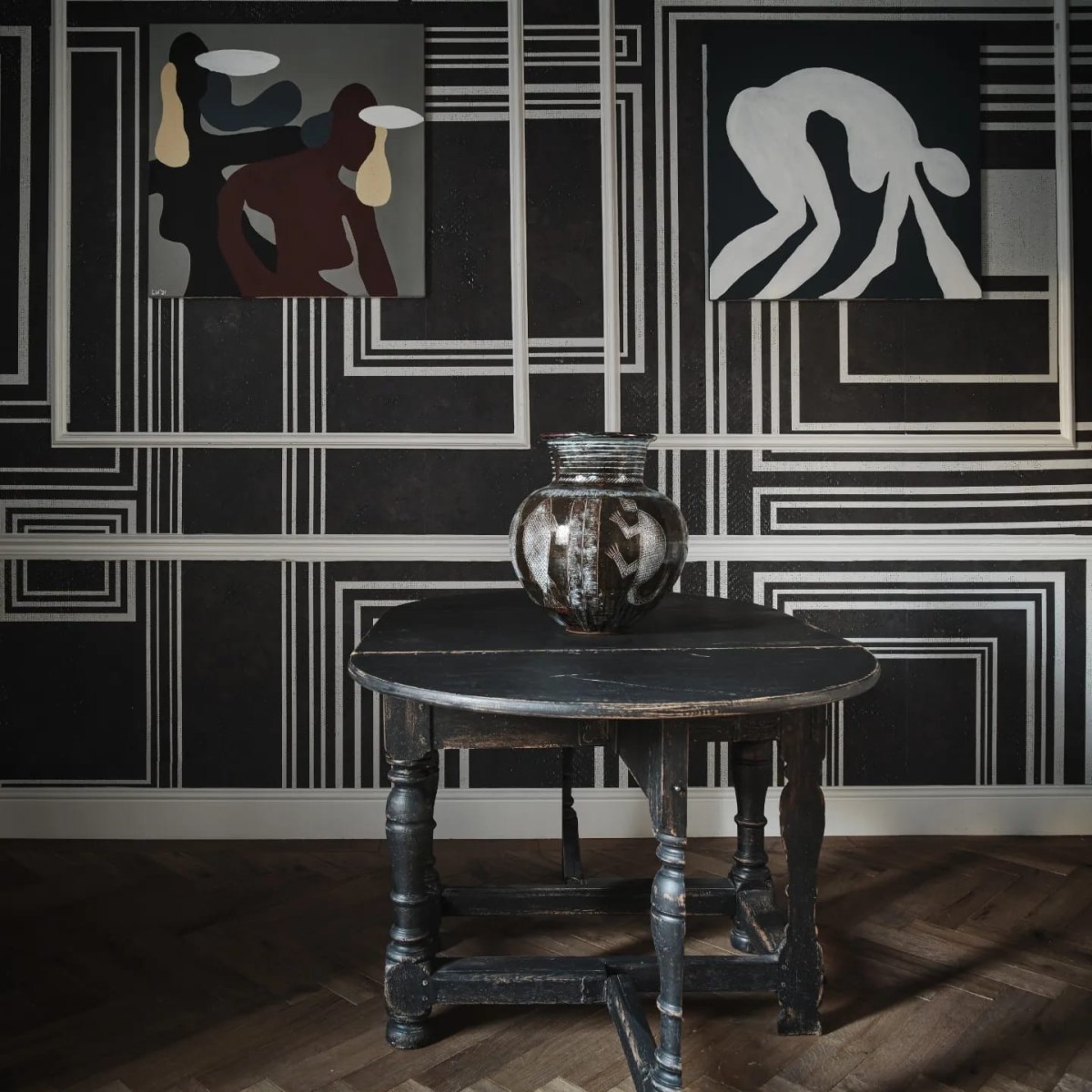
The African vernacular experience is a tapestry of language and its dialects, familial cultural norms and their tribal nuances, the pursuit of greatness anchored in the gravitas of communal duty. It is on this tapestry of intersectional culture, in a west London gallery that my social axis is tilted.
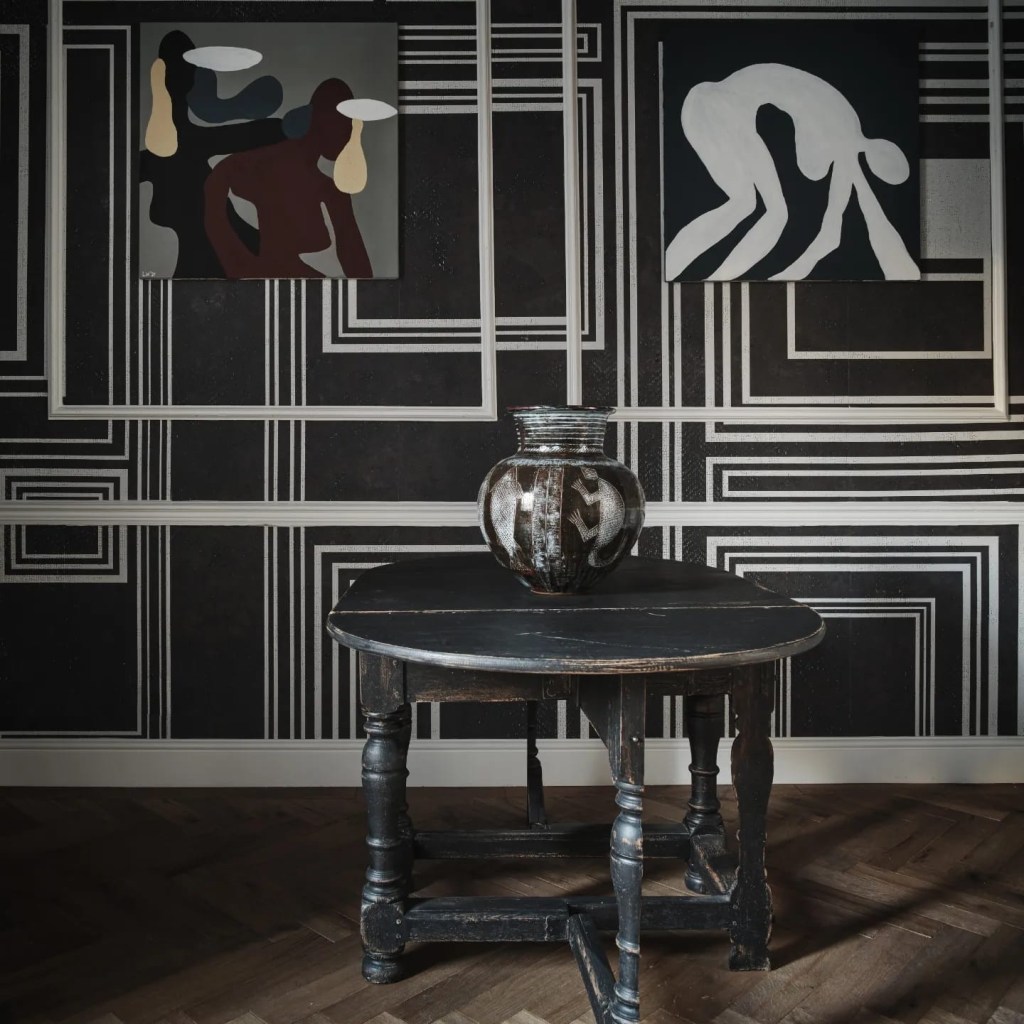
The door is opened by a tall, beautiful woman, with a dreadlocked ponytail, who welcomes us with homely ease. The gallery, at first sight, looks like its former life, a Georgian Marylebone white terraced home. This style of display is a far echo from the white-walled gallery norm. Instead, the works hang against floor-to-ceiling geometric walls. The featured pieces of contemporary furniture give the art a familial and intimate poise, making the majestic attainable, liveable.
I later learn that the woman is Shiro Muchiro, Kenyan born interior architect and founder of SoShiro Gallery. Her work centers on mixed media collaborations and expanding our experience beyond museums into lived spaces.
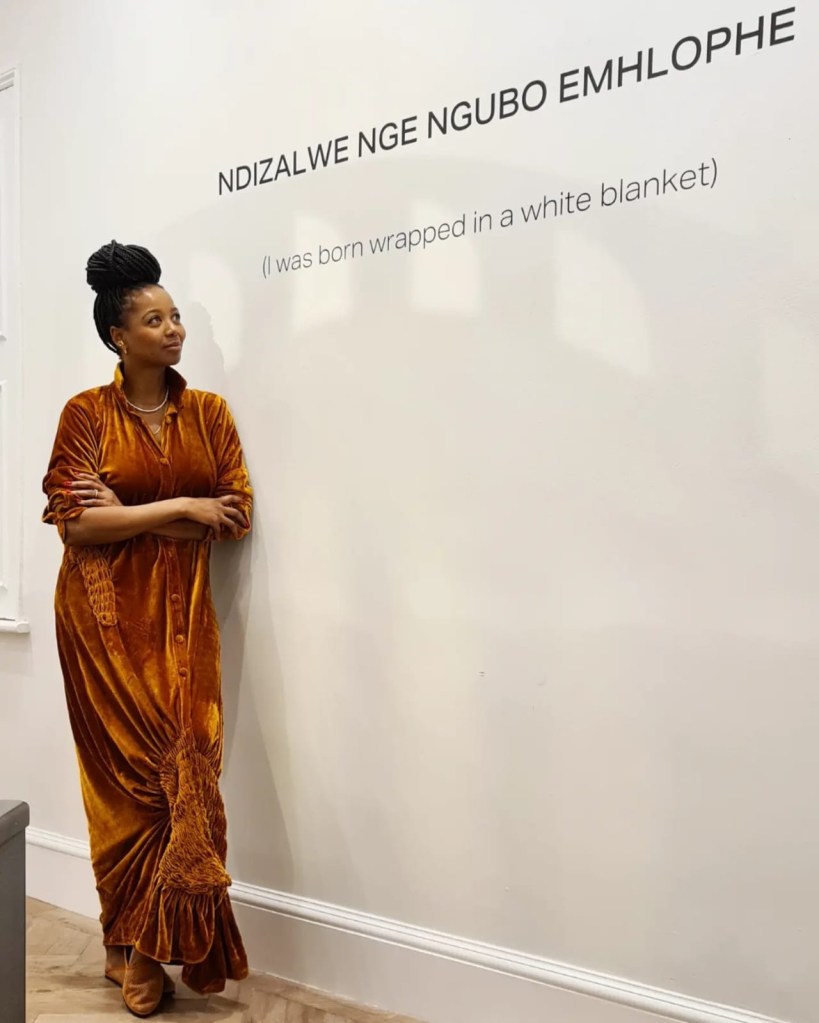
We turn into what would’ve been the living room and in it stands an icon in the South African art industry, Nomaza Nongqunga Coupez, draped in copper-orange velvet. The France-based entrepreneur and founder of Undiscovered Canvas, with a focus on “promoting investment in African arts”, greets us wholeheartedly. The girl had a split second to decide who I’d be in this narrative, but fangirl and hype-woman be my original nature! I Marylebonically, black-girl-in-an-art-gallery, lost my mind. She gracefully talks us through some of the pieces she’s curated for this exhibition. Her pride is that of a midwife, holding a new born in the air.
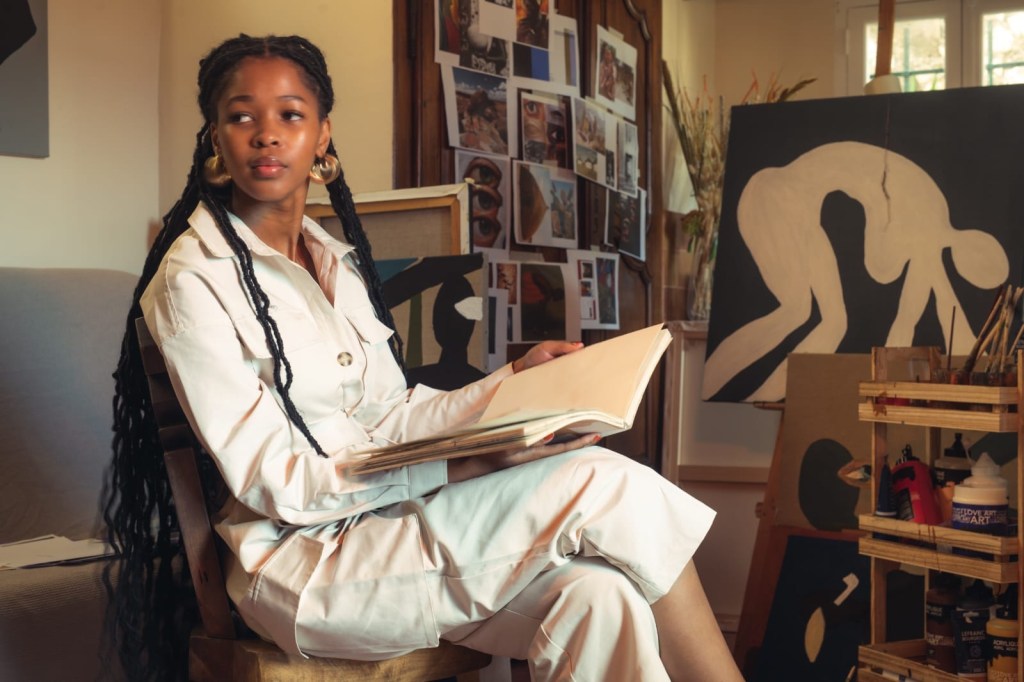
The African perspective is a common caricature in western culture. We are not often set up as intelligent, fully formed, positive contributors to our own narrative and to the world’s at large. But here I am, in a house exclusively dedicated to showcasing Luluma Wolf’s phenomenal work. Her art embodies a strong African vernacular language with a contemporary tone. She peels at the layers surrounding pre-colonial dignity and spirituality. In this collection of Ndizalwe Nge Ngubo Emhlophe (I was born wrapped in a white blanket), she works through the mediums of acrylic paint mixed with Mediterranean sand, carefully stroked onto linen canvas. It is upon her linen canvases that we gather and marvel. The work is gritty yet gentle. The prominent eye is a call, a cry, a conversation, a prayer.
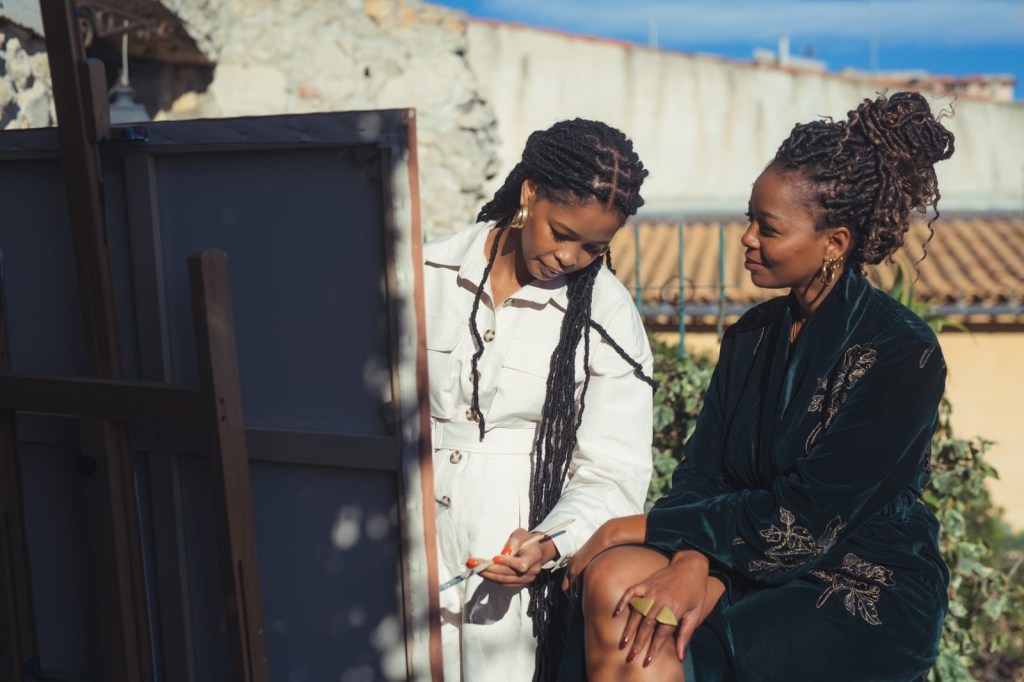
The evening ends with communion and warm drinks. At this point, we have also met Mae, Maya, and Elle of Zambian descent. Nomaza is generous with her time and heart. We all share a full spread of hope and the lessons of lived moments. We loan each other courage; we barter in beauty and purpose. I remember my WHY and breathe in this answered prayer.
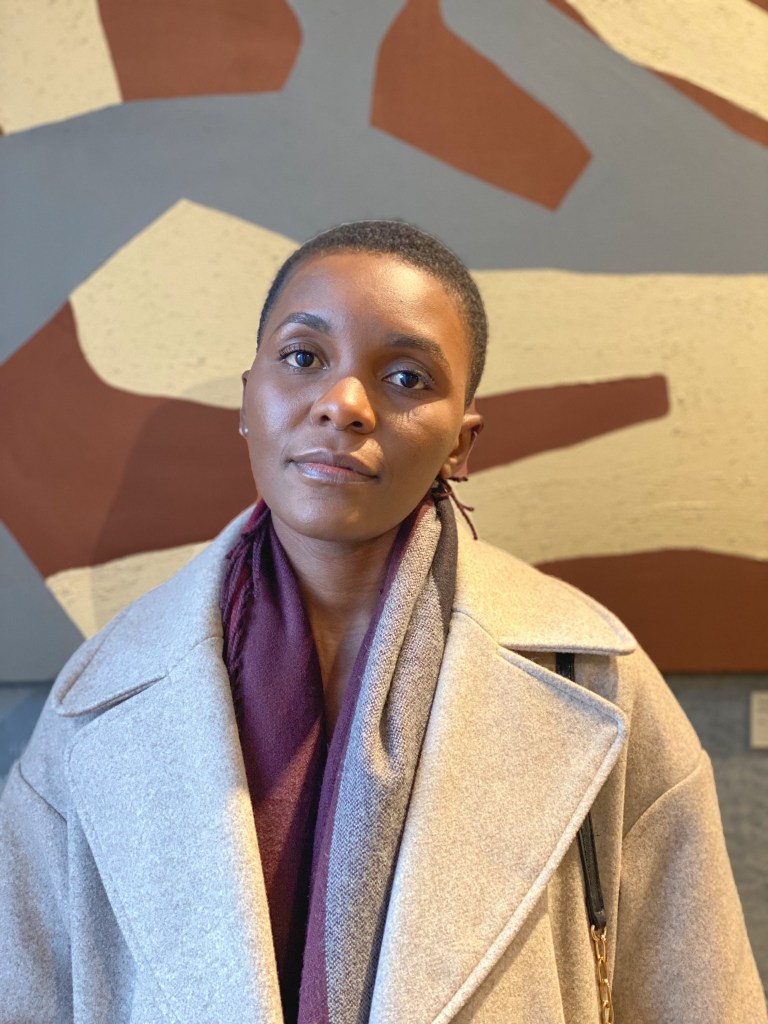
I STAN every single woman I met on this day: their generosity of spirit, their intelligence, and the important work they do for black women. You don’t know you are writing an International Women’s Month piece until you are writing one.
[There were guys too, like my friend David who shared it all with me 🙂 ]

 zuni.blog